Two-Day Delivery, Long-Term Damage: What Fast Shipping Is Really Costing NY & NJ Communities
There's a particular kind of satisfaction that comes with clicking "Order Now" and watching a package land on your doorstep before you've even had time to regret the purchase. It's frictionless. It's fast. And across New York and New Jersey, it's quietly hollowing out the kinds of businesses that once gave our towns and boroughs their character.
We're not here to lecture you about Amazon. You already know the story. What's worth talking about — what doesn't always make the headlines — is the downstream effect. The cobbler in Hoboken who can't compete with $19.99 replacement sneakers. The hardware store in Astoria that's watched its foot traffic halve since curbside delivery became standard. The small-batch furniture maker in Red Hook who lost three wholesale accounts in a single year because a national retailer offered "similar" pieces at a third of the price, shipped free in two days.
These aren't isolated stories. They're a pattern. And if you live in NY or NJ, it's playing out somewhere within a few miles of where you're reading this.
The Speed Economy and What It Erodes
The promise of fast shipping isn't inherently evil — convenience is a legitimate consumer value. But the infrastructure that powers next-day and same-day delivery is built on scale, and scale tends to flatten everything in its path.
When a national retailer can absorb shipping losses as a customer acquisition cost, a local specialty shop simply cannot match that math. What gets lost isn't just a sale. It's the expertise that came with it. The repair knowledge. The custom order capability. The relationship between a business owner who's been in the neighborhood for 20 years and a customer who trusts their judgment.
Marco V., who runs a small appliance repair shop in Union City, NJ, put it plainly: "People bring me a toaster that costs $40 to fix. Then they go online, see a new one for $35 with free shipping, and they're gone. I get it. But now they've got a landfill problem, I've lost a customer, and nobody wins except the warehouse."
That's the part that rarely shows up in the transaction. The cost of the discarded item. The carbon footprint of the expedited shipment. The vacancy that appears on a commercial strip when a shop like Marco's eventually closes.
What NY & NJ Local Businesses Are Actually Up Against
New York and New Jersey have some of the highest commercial rents in the country. Running a physical retail or service location here is already an act of financial courage. Layer on top of that the expectation — now basically baked into consumer culture — that anything can be had faster and cheaper online, and you start to understand why so many small business owners describe feeling like they're swimming against a tide they didn't create.
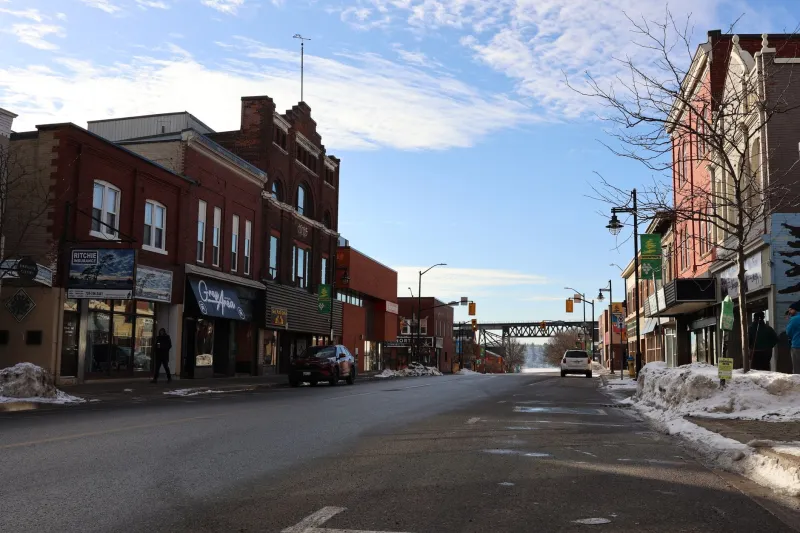
The specialty retail sector has been hit especially hard. Think about what used to anchor a neighborhood: the fabric store, the electronics repair shop, the local tile showroom, the family-owned garden center. In many parts of NJ and across NYC's outer boroughs, those anchors are gone or barely hanging on.
But here's what's interesting: the businesses that are surviving — and in some cases thriving — have found ways to offer something the algorithm genuinely can't replicate.
The Adaptation Playbook: What Locals Are Doing Right
Surviving the convenience economy isn't about refusing to modernize. The local businesses that are making it work have found a different kind of competitive edge.
Hyper-local expertise. A tile and stone showroom in Bergen County recently told us their sales have actually grown because contractors and homeowners are tired of receiving the wrong materials from online orders. "I know the building codes here. I know which products hold up in our climate. You can't Google that specific knowledge," the owner said. They've leaned into consultation as a service — something no fulfillment center can offer.
Repair and restoration as a value proposition. With sustainability becoming a genuine consumer priority, repair shops are rebranding their core service. Leather goods restoration, appliance repair, furniture refinishing — these businesses are finding new audiences among younger customers who are increasingly skeptical of throwaway culture.
Community as the product. Some local retailers have stopped trying to compete on price entirely and have instead invested in experience. Cooking supply shops that host weekend demos. Bookstores that double as event spaces. Hardware stores that run DIY workshops. The transaction becomes secondary to the relationship.
Why Your Purchasing Decision Is Actually a Policy Decision
Here's the part that doesn't get said enough: every time you choose a local vendor over a national platform, you're not just saving a business. You're funding a local tax base, supporting a job that's embedded in your community, and maintaining the kind of neighborhood infrastructure that takes decades to build and only months to lose.
In New York and New Jersey, that infrastructure is worth fighting for. These are dense, expensive, beautifully complicated markets. The local businesses that operate here are doing something genuinely hard. They deserve more than nostalgia — they deserve your actual dollars.
That doesn't mean you need to swear off online shopping entirely. But it does mean being intentional. Before you default to the fast-shipping option, ask yourself: Is there a local vendor who carries this? Is there someone in my borough or county who does this repair? Is there a specialty shop within 20 minutes that would give me better advice and keep that money circulating locally?
Finding the Right Local Vendors — That's What We're Here For
At First Choice NY NJ, our whole reason for existing is to make that question easier to answer. We're a directory built specifically for New York and New Jersey customers who want to find trusted, vetted local service providers and retailers — not a national call center with a local area code.
The businesses listed here are your neighbors. They're the ones who know your zip code, your building codes, your neighborhood's quirks. They're the ones who pick up the phone.
Fast shipping is a feature. A real local business is an asset. The difference matters more than most of us stop to think about — until the shop is gone and the storefront is dark, and we're left wondering how the block got so quiet.
Slow down the cart. Look local first. Your community will feel the difference.